June is Myasthenia Gravis Awareness Month around the world. Last June, this annual awareness-raising month passed me by entirely because I was feeling great! This June, I marked it by having a flare up of myasthenia symptoms which I experienced completely out of the blue in July 2021. That first time was absolutely horrible. I had just driven my whole family down to beautiful Wales for a week away with our extended family on Phil’s side. I love driving and Phil loves being DJ so that generally how we divide the responsibilities on our road trips. We got to St Bride’s Castle just near Haverfordwest, on the Pembrokeshire Coast National Park. We unpacked our bags then went to check out our great little holiday cottage, pausing to admire the view. I felt like I couldn’t quite concentrate on the horizon but I assumed that the long drive from London had tired me out and it would pass. Over the next 24 – 48 hours, my Google searches tell the story:
“Can you develop a squint?”
“What causes droopy eyelids?”
“Why am I seeing double?”
“Opticians Haverfordwest”
“If the opticians tells me to go to A&E, should I?”
“Could I have had a mini stroke?”
“A&E near Haverfordwest”
I gave up and went to Withybush A&E after it was suggested that I might have had a mini stroke and I simply could not believe that to be the case. As it was July 2021 and there were still a number of covid restrictions in place, Phil had to drop me off at A&E and wait for me outside in the carpark. Fortunately I did not have to wait the whole night, and I was called in to see Doctor Zion. He performed various simple tests on me and after about 15 minutes, said that I would need to go to A&E when I got home to London, but that he thought that I had a rare autoimmune condition called ‘myasthenia gravis’. Obviously I had never heard of this illness, but thanked him and went on my way. As Phil drove us back to our holiday cottage and waiting family, I jumped on Google, guessing at the spelling, certain that Doctor Zion had got it wrong because there was nothing wrong with me. Googling illnesses is never a good idea, but as I read on the NHS website about myasthenia gravis, I just laughed. There was no way that I had that. I wasn’t an ill person. It must be wrong.
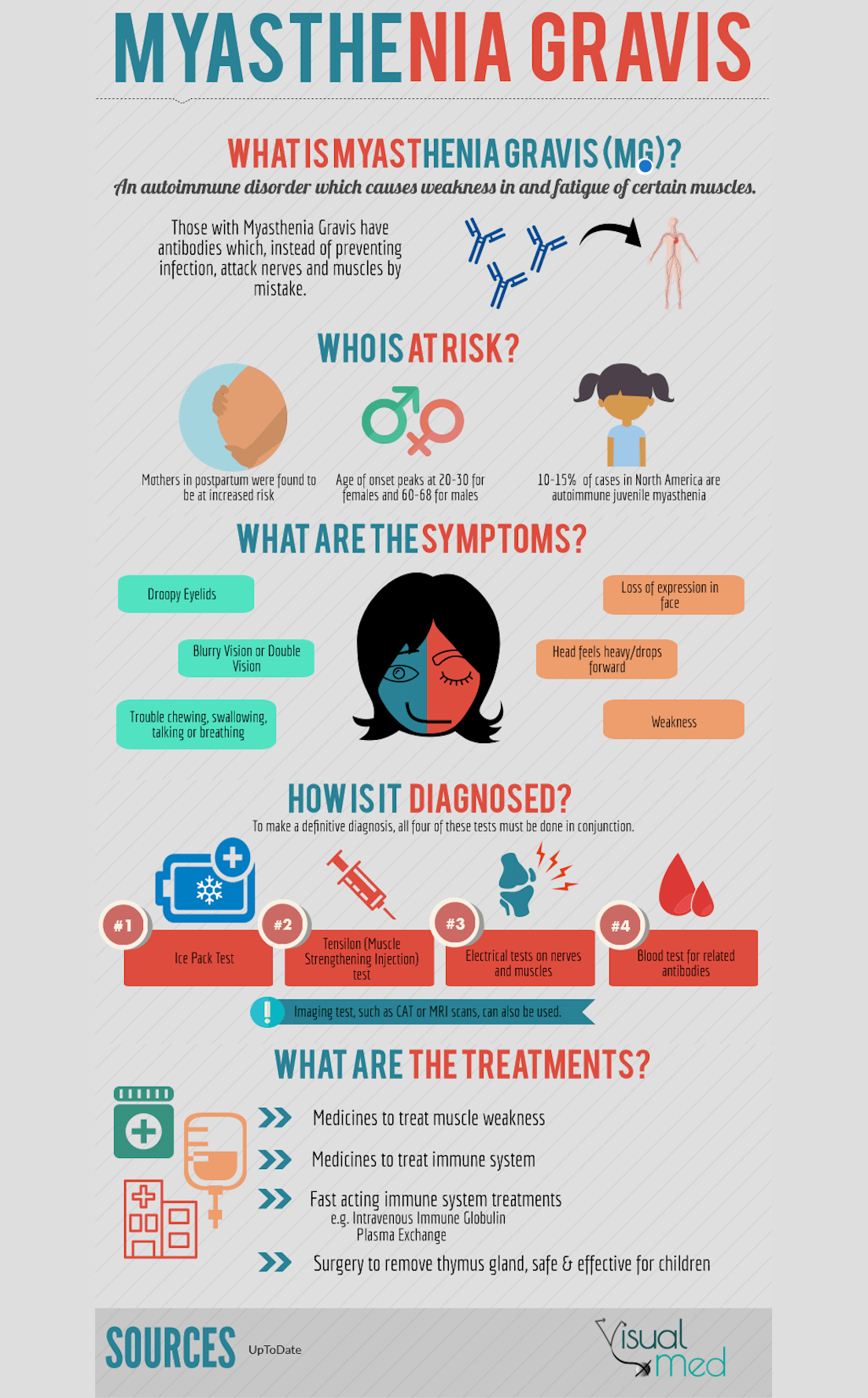
Myasthenia gravis is a chronic autoimmune disorder in which antibodies destroy the communication between nerves and muscle, resulting in weakness of the skeletal muscles.
Myasthenia gravis affects the voluntary muscles of the body, especially those that control the eyes, mouth, throat and limbs. The disease can strike anyone at any age, but is more frequently seen in women under 40 and men aged 50 and older. A myasthenia gravis crisis can involve difficulty in swallowing or breathing. The cause of myasthenia gravis is unknown and there is no cure, but early detection and prompt medical management can help people live longer, more functional lives. (From the Johns Hopkin website)
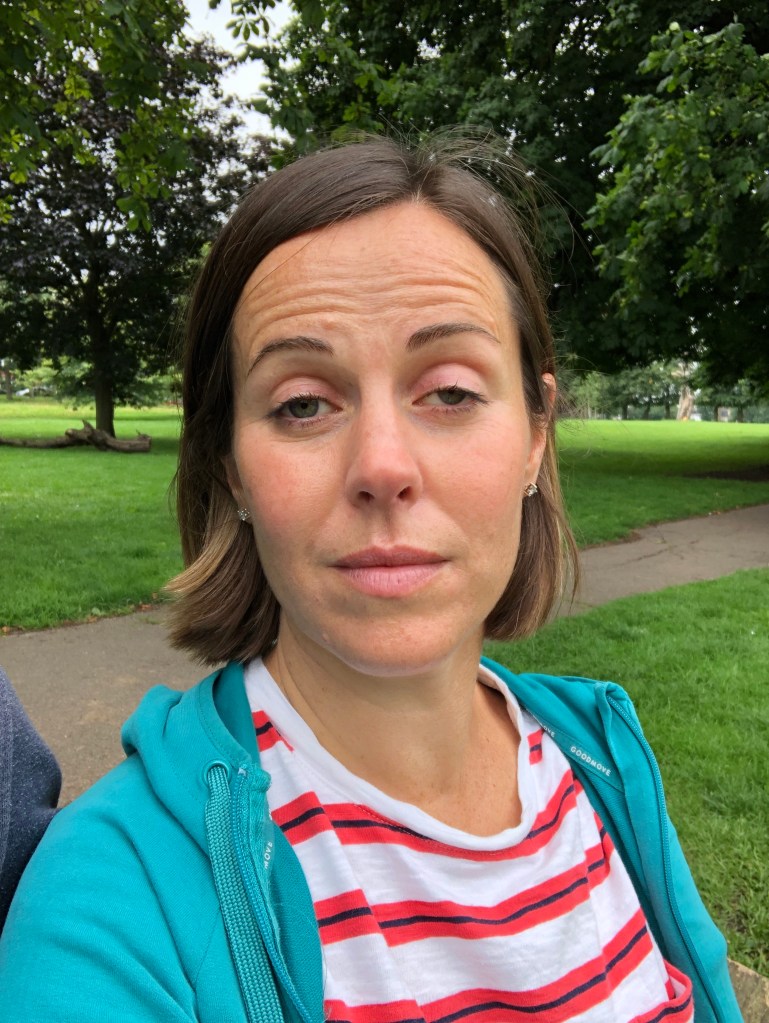
Over the course of the next couple of days, both of my eyelids starting drooping, by the evening often I could barely open my eyes. When one or both of my eyelids were open, the double vision that I experienced was completely disorientating, frustrating and embarrassing. It was the summer before I would be turning 40 and I felt completely halted in my tracks. Over the course of the next 3 months I attended numerous appointments, tests, and scans. I had innumerable blood tests and was poked and prodded by medical professionals to determine whether it was indeed myasthenia gravis. I was incredibly fortunate to discover Doctor Norwood, a specialist myasthenia neurologist working at Kings College London Hospital. She is kind, caring and genuinely supportive, as well as being a leading medical professional in her field. The myasthenia team at Kings is absolutely amazing and I am so thankful to be under their care. (And kudos to Doctor Zion at Withybush Hospital for accurately diagnosing me in about 25 minutes – the diagnosis time for people with myasthenia symptoms can be anything from 7 months to 3 years.)
I count myself as very fortunate that my symptoms are limited to my eyes and experiencing fatigue, but does not affect my chewing, speech, breathing or overall movement. Ocular myasthenia symptoms are drooping eyelids and double vision. By January 2022 these symptoms were under control and I returned to work after taking a significant break. I then started the process of weaning down my medication – which was then 30mg per day of prednisolone (steriods). This has to be a slow process so that the body can adjust and hopefully not overreact. In September 2023, I was medication free and I had put the whole confusing, life-changing experience behind me.
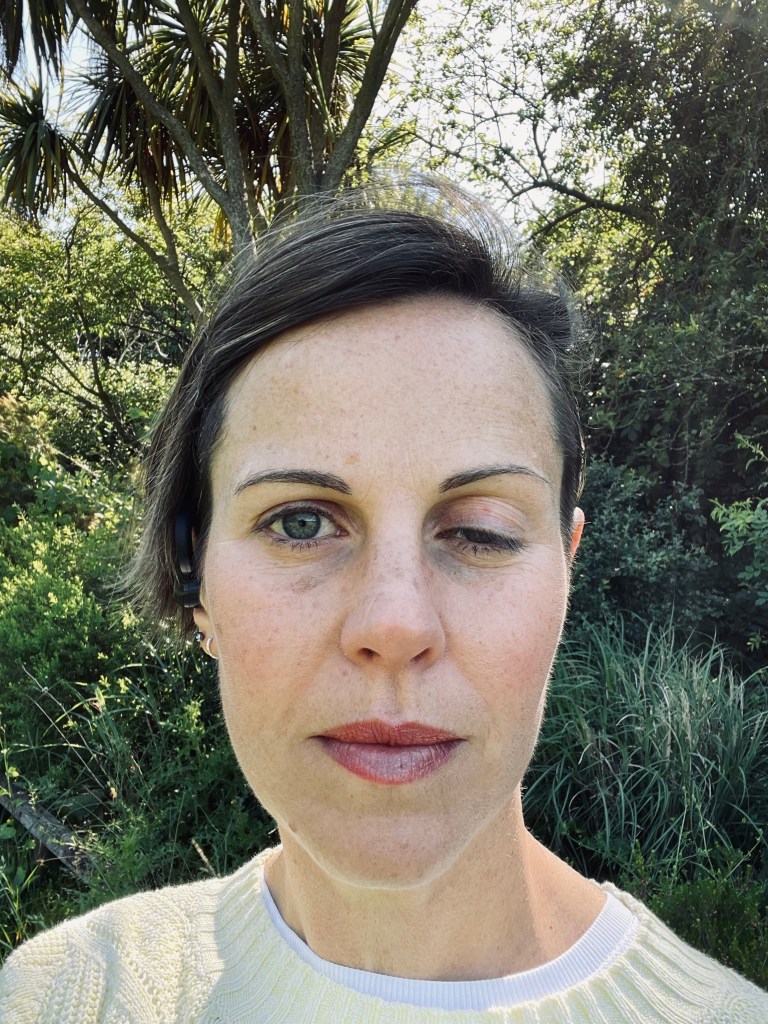
Until the 1 June (just in time for Myasthenia Awareness Month) when I noticed that as I was looking out across the hilltops of Matoba National Park near Bulawayo in Zimbabwe (where I was travelling for work) I couldn’t quite concentrate on the horizon. My eyes just wouldn’t focus precisely on the sunrise, and I knew that something was going wrong again. I was scared and actually quite devastated. I think that I had unconsciously decided that I didn’t have myasthenia anymore, and I could put it all behind me. I was also far from my family, in a different country and unable to do anything while I was away. I just had to wait until I got home to speak to the myasthenia team at Kings. Fortunately my wonderful colleagues/ friends that I was travelling with were incredibly caring and kind to me and I felt very well looked after, despite the mounting fear and uncertainty I was feeling.
I have been living through this flare for nearly a month. After contacting the myasthenia team on my return and chatting a number of times with the specialist nurse, I have restarted my medication and I will be seeing the neurologist on the 3rd July. I have had some time off work as I have waited for my symptoms to improve. I have prioritised rest, slowing things down, noticing how my body feels, paying attention to my mental wellbeing as well as physical health. I have thought alot about what could have triggered this flare up, and what I can do to mitigate against it in the future. More on that to come, but for now, I want to add my voice to those who have raised theirs to tell their stories – so that there can be more understanding, awareness and faster diagnosis times for those who find themselves on this surprising and unexpected journey with a relapsing-remitting chronic illness.
I feel incredibly thankful for the constant love and care of my family and friends, and the support and compassion of my church and Urban Expression communities, both the first time that I experienced myasthenia symptoms, and through this recent flare. I would not have chosen this path, but I have learned so much over the past 3 years about health (mental and physical), patience, what is important and how people who feel less than ‘perfect’ fit into society, not to mention how to slow down, what meaning and value are all about, and how I am loved and worthy even if and when I do nothing.
Myasthenia might slow me down a bit, but it won’t stop me. And this month, we want to particularly raise awareness with GPs and other frontline medical professionals to know what myasthenia is so that it can be accurately diagnosed as fast as possible so that those who struggle with this condition can have prompt and appropriate treatment to live full and joyful lives.
If you want to learn more, the only UK charity that supports those living with myasthenia is MyAware.
My myasthenia looks – 3 years separate. 2021 before treatment, 2024 during a flare up.
 stumbling hopefully in the right direction
Leave a comment